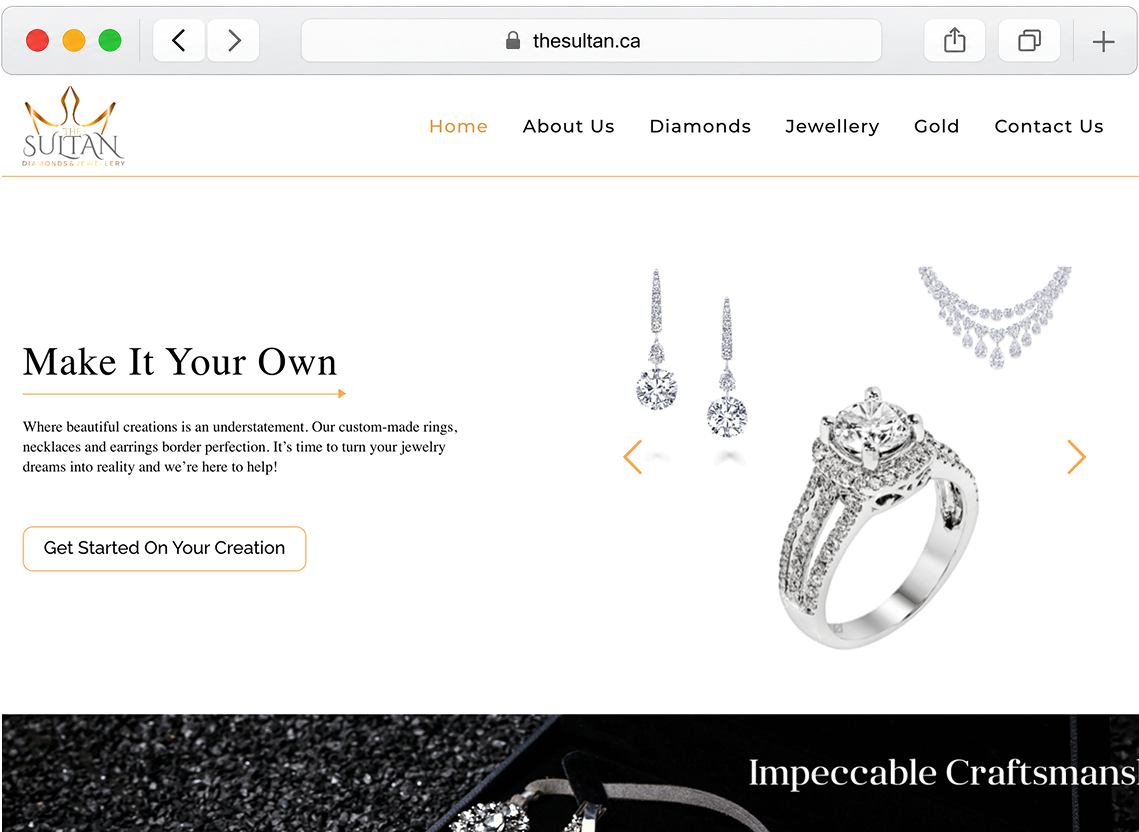
JEWELLERY / RETAIL
The Sultan
Product-led storefront design featuring custom jewellery and strong visual merchandising.
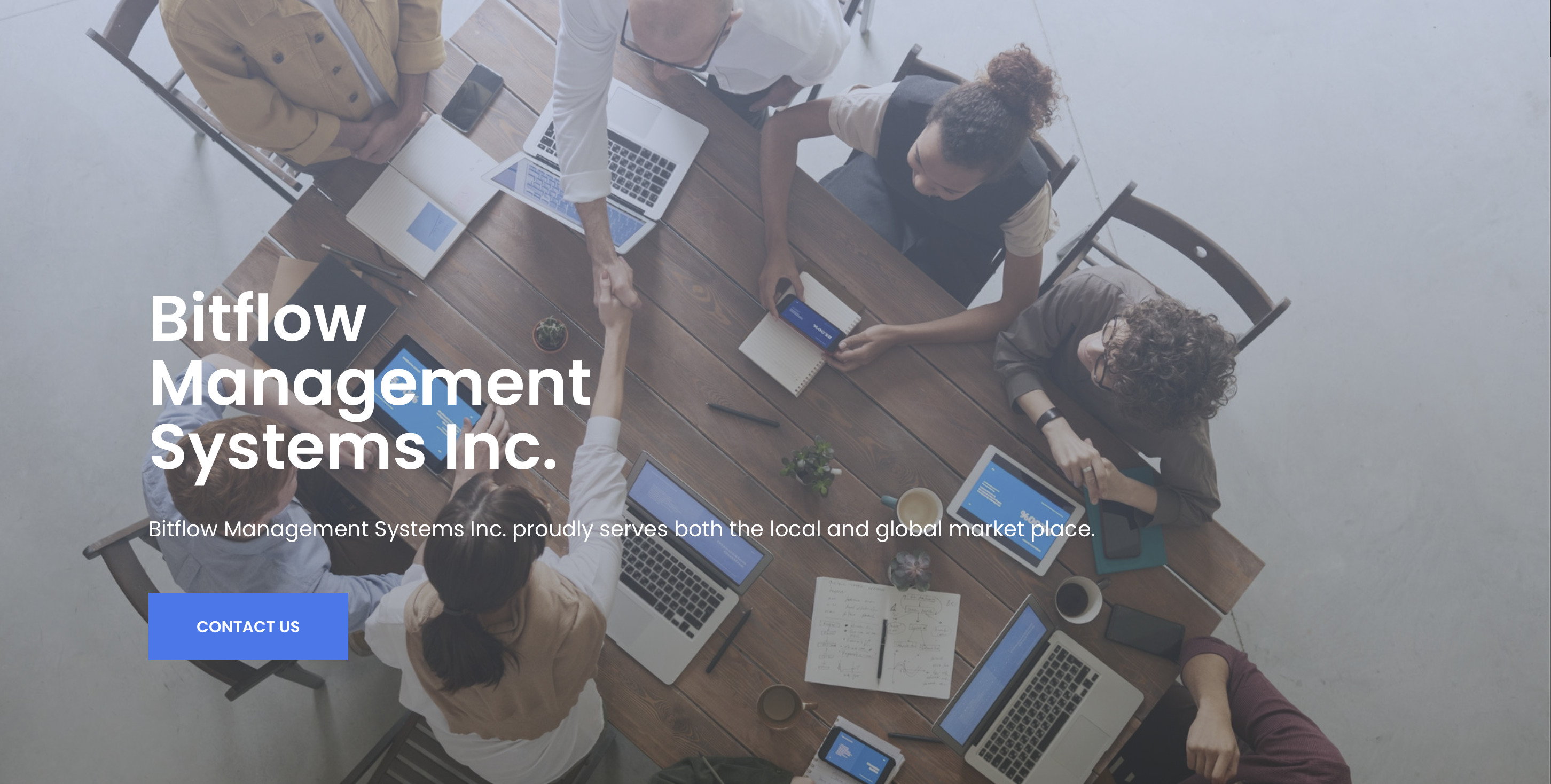
VISIT SITE ↗BITFLOW MANAGEMENT SYSTEMS / DESIGN & DEVELOPMENT / 2025–2026
I worked directly with business owners to turn their goals into clear, responsive websites—from discovery and wireframes to development, QA, and launch.
Role: Web Designer & Developer
Focus: UX/UI, client delivery, and front-end development
client websites launched
project revenue
recurring maintenance and hosting
intern to independent delivery
01 / MY ROLE
Every client had a different audience, business model, content needs, and timeline. My work was to turn those constraints into a website the business could review, use, and launch—not just a design concept.
WHAT I OWNED
Client meetings and requirements, navigation, information architecture, wireframing, responsive UI, HTML/CSS/JavaScript and WordPress development, accessibility considerations, QA, and site launch.
01 / UNDERSTAND
Discuss audience, business goals and content with clients.
02 / STRUCTURE
Turn requirements into navigation and wireframes.
03 / DESIGN & BUILD
Review design directions and develop responsive pages.
04 / QA & LAUNCH
Review implementation, refine and launch the site.
02 / FEATURED CASE STUDY
Polvit was the first client project I handled independently from start to finish. I led discovery meetings, developed early wireframes, reviewed design options with the team, and delivered the approved site through development and launch on a tight turnaround.
VIEW LIVE WEBSITE ↗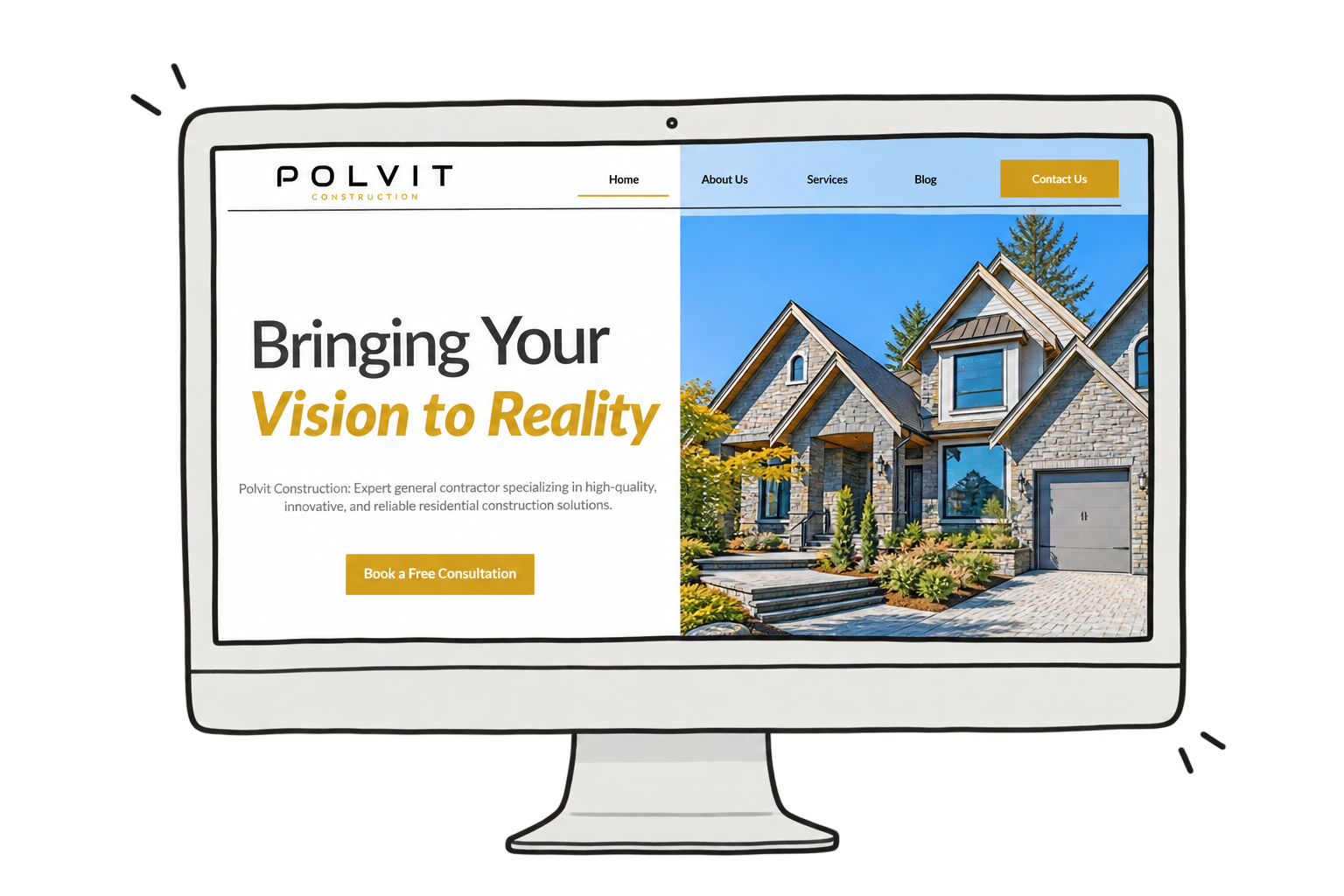
The website needed to translate the company's work and goals into a structure that prospective clients could navigate. Getting the hierarchy and visual direction right required close client collaboration.
01 / DISCOVER
I met with the business owners to establish goals, website needs, and priorities.
02 / EXPLORE
I translated those discussions into wireframes and presented possible design directions.
03 / ALIGN
The team and I reviewed options and chose a structure and visual approach together.
04 / SHIP
I developed and launched the website, keeping stakeholders informed throughout.
Design takeaway: The early wireframes made decisions visible. They were a way to align with the client before committing time to development.
03 / WIREFRAME TO LIVE UI
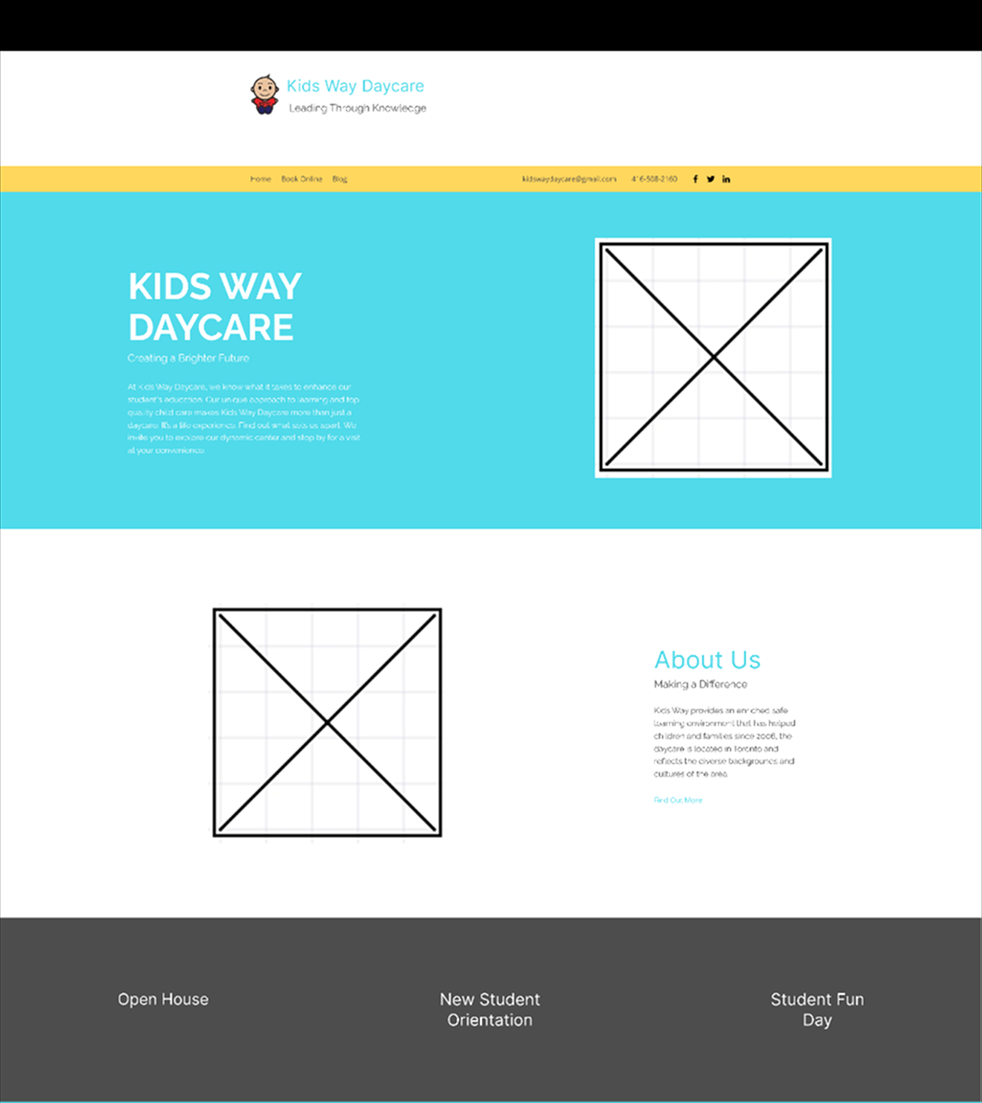
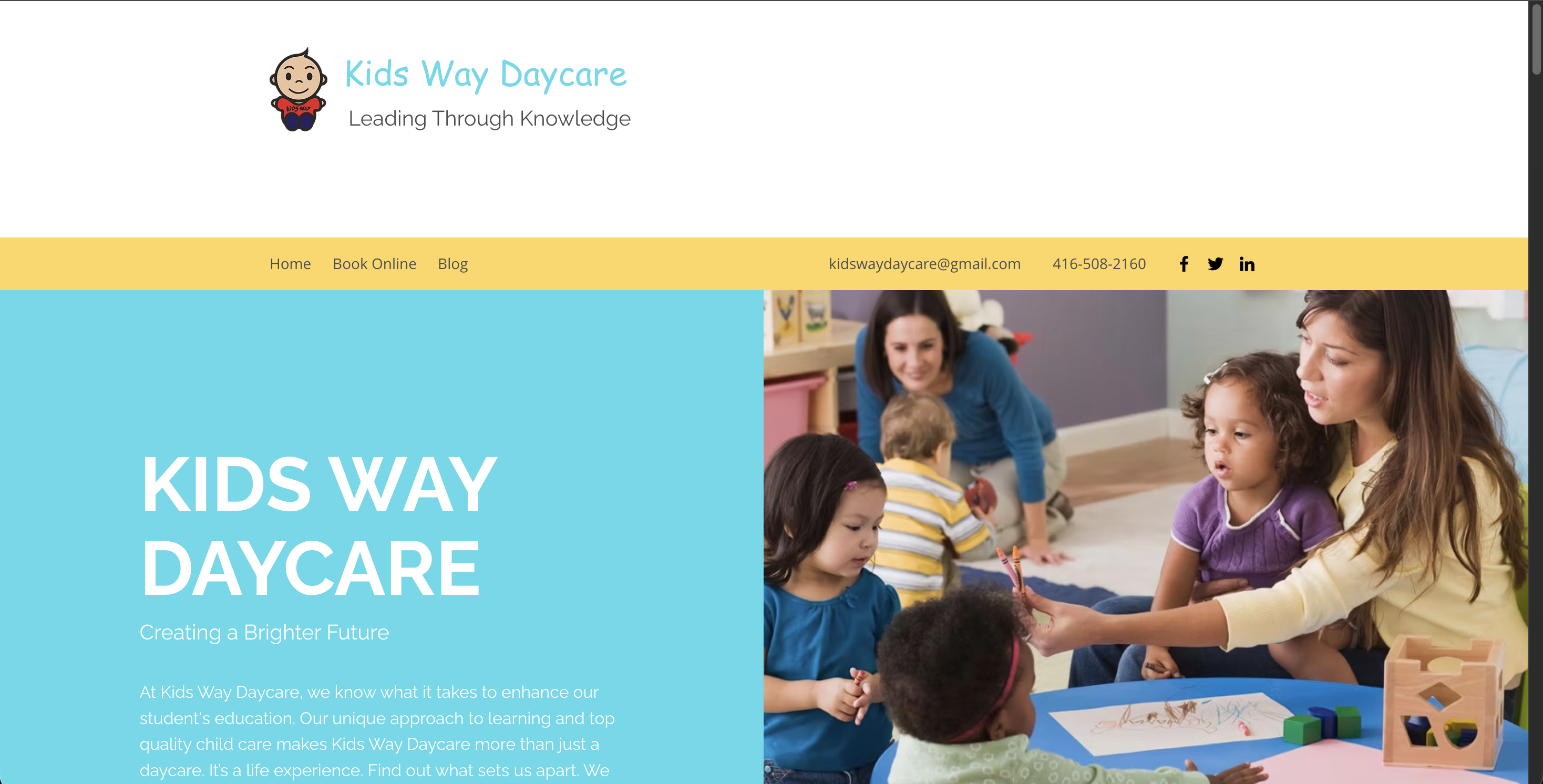
Kids Way Daycare shows the evolution from early page structure to an implemented homepage. The content hierarchy remained recognizable while photography, colour, typography, and real assets replaced the initial placeholders.
04 / SELECTED CLIENT LAUNCHES
Across 14 launches, I adapted visual priorities and information hierarchy to distinct audiences. These selected projects show the range of businesses I helped serve.
JEWELLERY / RETAIL
Product-led storefront design featuring custom jewellery and strong visual merchandising.
VISIT SITE ↗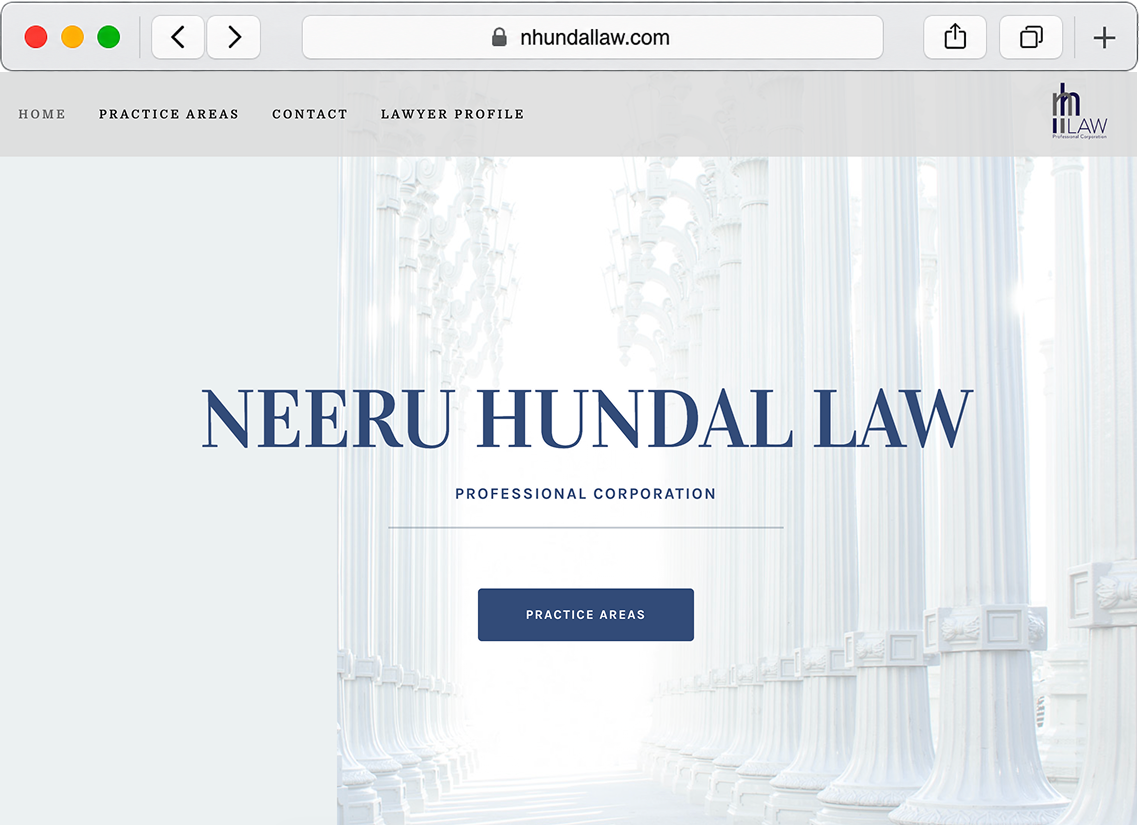
LEGAL SERVICES
A restrained visual style emphasizing professionalism and clear practice-area navigation.
VISIT SITE ↗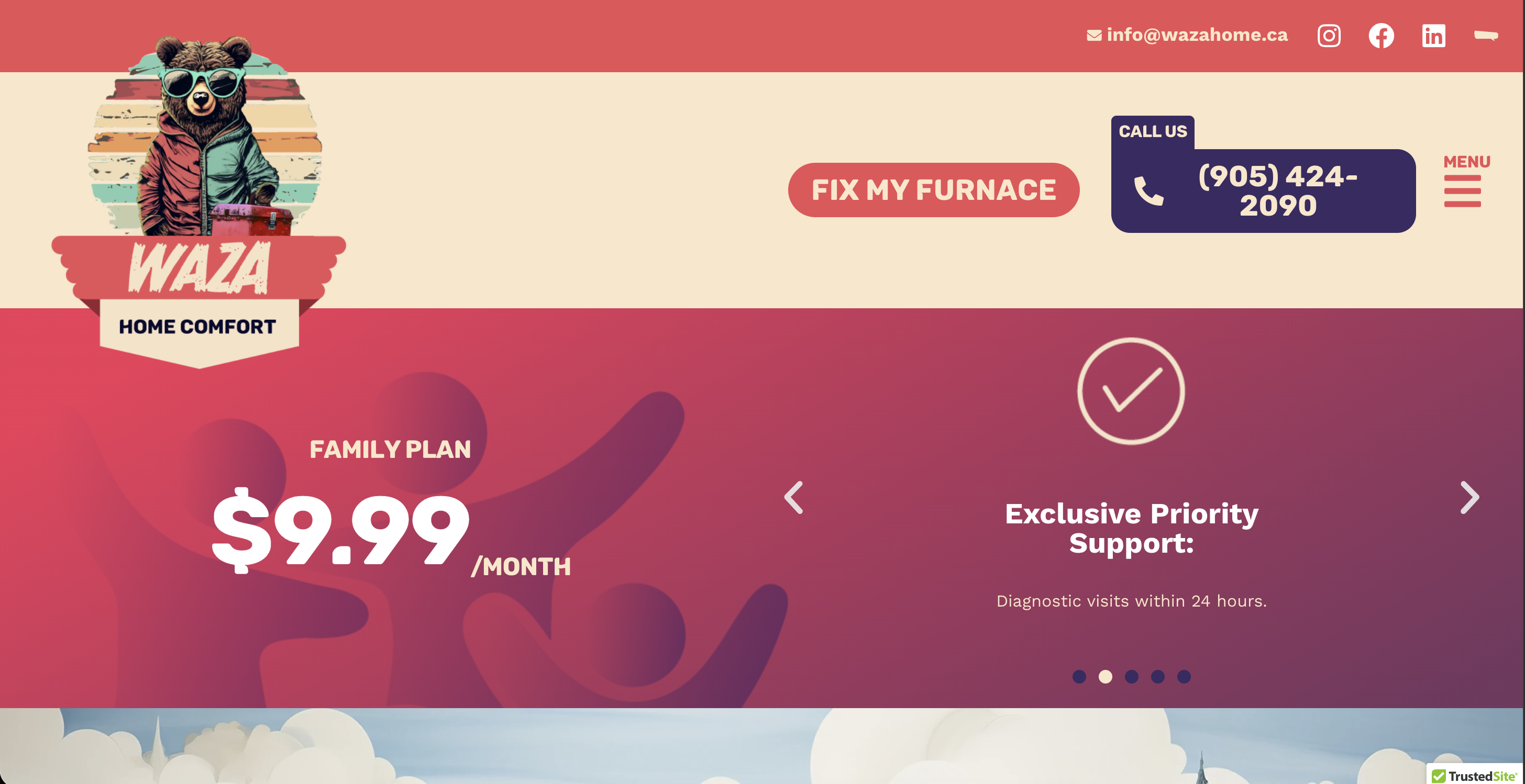
HOME SERVICES / HVAC
Service and pricing information positioned prominently for prospective customers.
VISIT SITE ↗05 / OUTCOMES & REFLECTION
I contributed to 14 launched websites, more than $14K in project revenue, and $280 per month in recurring hosting and maintenance. After four months as an intern, I progressed into freelance client delivery, owning design and development through QA and launch.
Ask better questions: Good design begins with clear business and audience needs.
Design to implement: Responsive behaviour, content, and usability matter beyond high-fidelity screens.
Own delivery: Stakeholder communication, quality checks, and launch are integral to the final experience.